Over 85 million Nigerians have no access to electricity. Millions more endure 18-hour daily blackouts while running generators they cannot afford. Energy poverty is not a footnote — it is the root cause of stunted businesses, failing hospitals, out-of-school children, and preventable deaths. SATAF's Clean Energy division is working to change that through research, advocacy, community solar programmes, and demanding accountability from those in power.
These are not projections or estimates. They are the lived daily reality of over 200 million people in Africa's most populous nation.
Across northern Nigeria, primary healthcare centres and general hospitals run on diesel generators — when they can afford to keep them fuelled. When fuel runs out, operating theatres go dark, refrigerators storing vaccines switch off, oxygen concentrators stop. This is not a developing-world cliché. It is what happens every week in Gombe, Yobe, Borno, Kogi, and dozens of other states. SATAF has documented cases in communities we serve where maternal complications turned fatal because theatre lighting failed.
Reliable electricity is not an amenity in a hospital — it is life support. We will not stop saying this until policymakers treat it as such.
In 2024, SATAF conducted community assessments across five local government areas in Gombe State. In every household surveyed, children reported studying after dark either by phone screen or kerosene lantern. The cognitive cost of poor lighting over years of schooling is measurable — but the deeper injustice is that families in Lagos and Abuja with stable power are competing in the same exam system with families who spend the evening managing blackouts.
This is an equity crisis dressed up as an infrastructure problem.
A barber in Gombe City pays a monthly electricity tariff to the DISCO, then pays again for diesel when — not if — NEPA fails. A fashion designer cannot quote turnaround times because she cannot predict her work hours. A cold-store owner watches produce spoil and absorbs losses that wipe out slim margins built over weeks. The generator industry is thriving in Nigeria; everything else is not. Reliable electricity does not just reduce costs — it allows people to make plans, make promises, and build enterprises.
When electricity is unreliable, cooking reverts to firewood and charcoal. The burden of sourcing fuel, managing smoke, and managing household economics around power cuts falls disproportionately on women. Indoor air pollution from biomass cooking kills more Nigerians annually than malaria. It is a silent epidemic, and it tracks almost perfectly with the electricity access map. SATAF's energy work is, at its core, also a gender justice issue.
Nigeria sits atop some of the world's largest natural gas reserves and has one of Africa's largest hydroelectric potential. On paper, there is no reason this country should have an electricity crisis. In practice, decades of under-investment, regulatory dysfunction, distribution company (DISCO) failures, gas supply bottlenecks, transmission losses, and systemic corruption have created a grid that produces less electricity per capita than most low-income countries.
The 2013 power sector privatisation was designed to fix this. It has not. DISCOs remain technically insolvent. Generation companies cannot collect payment. The transmission network — still government-owned — is a single point of failure. Consumers pay rising tariffs for degrading service. Meanwhile, government officials enjoy 24-hour power from dedicated feeders.
SATAF does not believe the answer is to wait for a better government. The answer is to build distributed, community-owned renewable energy while simultaneously holding the system accountable.
We cannot build enough solar panels to replace a broken national grid. But we can light communities while demanding the grid be fixed, and we can document the human cost until policymakers can no longer ignore it.
We write. We publish. We submit. SATAF produces policy briefs, open letters, community testimonies, and research reports directed at the National Assembly, the Nigerian Electricity Regulatory Commission (NERC), distribution companies, and state-level energy ministries. Our advocacy draws on data collected from communities we serve — it is not abstract analysis. When we say hospitals lack power in Gombe, we have the names, dates, and documented outcomes.
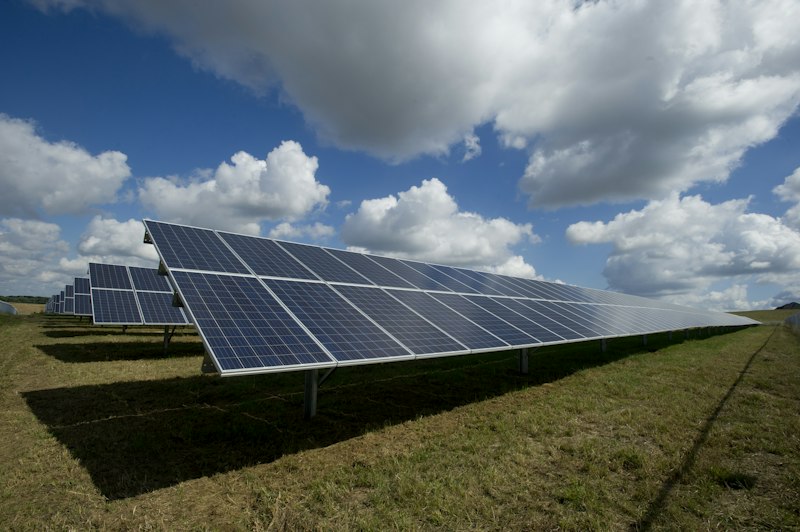
We do not wait for the grid. While we advocate for systemic change, we install solar home systems, community micro-grids, and solar-powered facilities in the communities we serve. Starting in Gombe State and expanding across northern Nigeria, our solar programme prioritises health facilities, schools, and productive use — sewing machines, phone charging, grain mills — that generate economic returns alongside light.
Good advocacy requires irrefutable evidence. Our research team conducts community energy audits, documents economic losses from outages, tracks DISCO service quality against tariff levels, and publishes findings in accessible formats for both technical and non-technical audiences. We track what gets promised, what gets funded, and what actually gets built — and we publish the gap.
Partnering with primary healthcare centres in three local government areas in Gombe State to install 5kW solar systems with battery backup — ensuring continuous power for vaccine refrigeration, operating theatre lighting, and medical equipment. Phase 1 targets 12 facilities. Phase 2 will expand to 40.
A community-led monitoring programme that tracks daily electricity hours across 50 reporting households per DISCO franchise area. Data is published monthly on our platform and submitted to NERC as evidence for regulatory enforcement. This is citizen-powered accountability — the kind DISCOs cannot ignore and cannot erase.
A geospatial research project mapping electricity access, generator dependency, and renewable energy potential across 200+ communities in Gombe, Borno, Yobe, Adamawa, and Taraba states. The resulting dataset will be published open-access and submitted to the Rural Electrification Agency (REA) and the World Bank Nigeria energy portfolio.
Solar electrification of public secondary schools, prioritising computer labs and science classrooms. Paired with digital literacy training, this programme directly addresses the education-energy nexus — giving students the conditions to study, compete, and imagine futures beyond subsistence.
A community education and distribution programme targeting the transition from biomass cooking to clean cooking solutions — LPG, improved cookstoves, and biogas where applicable. Framed as both an energy access and a public health intervention, given the documented mortality burden of indoor air pollution in northern Nigerian households.
“Access to electricity is a human right. Not a luxury. Not a reward for being close to a DISCO substation. Not a privilege for urban elites. In Nigeria, the refusal to power rural communities is a policy choice — and like every policy choice, it can be reversed. SATAF will continue to demand that reversal through every legitimate means available: evidence, advocacy, community action, and an unrelenting refusal to accept that this is simply how things are.”
Hajiya Falmata runs a small cold-store business in Kumo, Gombe State. She sells chilled drinks, frozen fish, and meat to households and small restaurants within a two-kilometre radius. Her entire livelihood depends on one thing she has almost no control over: electricity.
On a typical week in 2024, she received between four and eight hours of grid power per day. The rest of the time she ran a petrol generator, consuming between 3 and 5 litres per hour. Her monthly generator fuel cost alone exceeded ₦80,000 — more than she cleared in profit most months. “I am not in the cold store business,” she said. “I am in the generator business. Cold store is just the excuse.”
In early 2025, SATAF installed a 3kW solar system with 10kWh battery storage at her premises. Her generator fuel bill dropped by 80%. Within six months she had hired an assistant and expanded her product range. Her comment when the system went live: “So this was all it took. Just light.”
Our advocacy is specific, not general. We name the policies we want, the institutions responsible for them, and the deadlines by which they should be delivered.
We call on the Federal Ministry of Power to set legally binding annual targets for new electricity connections in LGAs currently below 30% access rate — with penalties for DISCOs and REA contractors who miss them.
Every federal and state primary healthcare centre should have guaranteed backup power by 2027. The cost of solar battery systems at this scale is a fraction of the cost of preventable deaths from power failures. This is a budgetary choice, not a technical impossibility.
Distribution companies must be held contractually accountable for minimum service hours. The current regime permits DISCOs to collect tariffs for power they do not deliver. SATAF calls on NERC to enforce existing service level agreements and revoke franchises for chronic non-performance.
NERC, the REA, and the Ministry of Power should publish granular, LGA-level data on electricity access, hours of supply, and new connections — monthly, publicly, and in machine-readable formats. Accountability requires visibility.
A targeted capital subsidy — not a loan — for rural micro-enterprises to acquire solar systems for productive use would recoup its cost in reduced generator imports, increased productivity, and expanded tax base within three years. The evidence supports this. SATAF has the data.
Rural communities most affected by energy poverty have no seat at the table where electricity policy is made. SATAF calls for formalised community consultation requirements in all REA and DISCO franchise reviews — and we will facilitate those consultations ourselves if government will not.
Add your name to open letters directed at NERC, the Ministry of Power, and state governors. Individual voices aggregated are harder to ignore than institutional reports. It takes 90 seconds.
Sign a letter →We work with local government authorities, NGOs, development finance institutions, and private sector partners to fund and implement clean energy installations. If you have resources, reach, or technical capacity, let’s talk.
Partner with SATAF →SATAF publishes energy research, community stories, and field reports from contributors across Nigeria. If you are documenting energy poverty or clean energy solutions on the ground, we want to amplify your work.
Submit your work →